Minnesota Embroidery Design Review for Small Business Merch
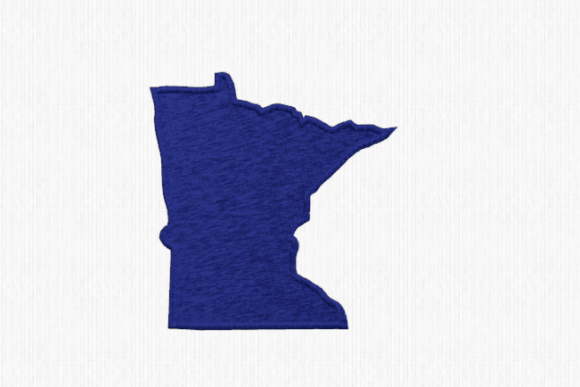
As an embroidery designer who has spent years digitizing and reviewing files for commercial use, I approach every new machine embroidery design with a critical eye. It is not just about whether a pattern looks cute on a screen; it is about how it performs under the needle, how it holds up after washing, and most importantly, how it serves the brand identity of the business using it. Today, I am reviewing the Minnesota design, a piece categorized under North America themes, intended for those looking to showcase local pride or regional affection through Embroidery.
The product description promises a "bright and cheery decoration" suitable for towels, shirts, and blankets. For small business owners, Etsy sellers, and apparel decorators, this suggests a versatile asset. However, versatility in marketing copy does not always translate to versatility in production. Let us break down how this state silhouette design functions in real-world commercial applications.
First Impressions: Visual Personality and Brand Fit
The immediate impression of the Minnesota design is one of approachability. State outlines are inherently recognizable, which reduces the cognitive load for the viewer. When a customer sees the shape of Minnesota, they instantly connect it to home, heritage, or travel. This makes the design feel friendly and communal rather than exclusive or high-fashion.
For a boutique, café, or creative studio located within the state, this design acts as a subtle nod to community roots. It feels handmade and authentic, which aligns perfectly with the current consumer demand for goods that feel personal and locally sourced. If your brand identity leans toward rustic, playful, or classic Americana, this design fits seamlessly. However, if your brand is ultra-modern or minimalist, you must ensure the stitch style and thread colors do not appear too busy or dated.
Real-World Applications for Small Business Merch
The true test of any digital embroidery file is its adaptability across different products. Here is how I envision the Minnesota design performing in various commercial scenarios:
- Embroidered Patches: This is perhaps the strongest use case. A state outline works exceptionally well as a standalone patch. You can sew these onto denim jackets, canvas tote bags, or even use them as hangtags for handmade products. The clear boundary of the state shape provides a natural border for satin stitching, ensuring clean edges.
- Custom Apparel and Uniforms: For staff uniforms in local businesses, placing this design on the chest or sleeve adds a layer of local pride without overwhelming the company logo. It works well on polo shirts, aprons, and work shirts, creating a sense of team unity and community connection.
- Cap Embroidery: Caps are a staple of promotional merch. The Minnesota shape, depending on its width-to-height ratio, can fit nicely on the front panel of a baseball cap. However, curvature is a challenge. Ensure the design is not too wide, or it will distort around the seams of the cap.
- Tote Bag Design: Canvas totes are popular for grocery stores, bookshops, and markets. A bright, cheery version of this design can serve as the main graphic element. Because canvas has a visible weave, you may need higher stitch density to ensure full coverage and prevent the fabric from showing through.
- Customer Gifts and Favors: As mentioned in the description, this is great for favors. Think embroidered hand towels for Airbnb hosts in Minnesota, or small blanket accents for baby showers. These items have high perceived value when personalized with local imagery.
Technical Considerations and Production Challenges
While the concept is strong, execution is where many small businesses stumble. Before running a large batch of commercial embroidery, you must address several technical factors.
Stitch Density and Fabric Texture: The description mentions "bright and cheery," which often implies multiple thread colors. Be cautious with high stitch density on lightweight fabrics like standard t-shirts. Too many stitches can cause puckering. Always use the correct stabilizer—cut-away for stretchy knits and tear-away for woven cottons. Test the design on the actual fabric texture you plan to use. A smooth poly-blend behaves very differently than a rough linen or thick towel.
Size and Legibility: If you plan to use this as a small chest logo or on a curved surface like a cap, verify the minimum viable size. Detailed outlines can become muddy if scaled down too far. If the design includes internal details (like lakes or borders), they may disappear at smaller sizes. I recommend testing the design at 1 inch, 2 inches, and 3 inches to see where clarity is lost.
Thread Color Contrast: To maintain the "cheery" aesthetic, color choice is vital. However, for business use, consider how it looks in black and white first. If the design relies solely on color contrast to define its shape, it may fail when printed on monochrome marketing materials or viewed by those with color vision deficiencies. Ensure the outline is distinct enough to stand alone.
Enhancing Brand Identity and Customer Trust
Using a recognizable symbol like the Minnesota state shape can significantly boost brand recognition. It signals that your business is part of the local fabric. This builds trust with customers who prefer supporting local enterprises. When used consistently across your design assets—from your website header to your physical finished product—it creates visual consistency.
For Etsy sellers and crafters, this design adds value to simple items. A plain mug becomes a souvenir; a blank tote becomes a statement piece. This perceived value allows for higher pricing margins. Furthermore, using a professional-quality embroidery file demonstrates attention to detail. Sloppy embroidery with loose threads or poor registration damages brand reputation, while crisp, clean stitching reinforces professionalism.
Practical Designer Notes for Implementation
Before you commit to production, follow this checklist to ensure the best results:
- Check File Specifications: The product description does not list exact stitch counts, file formats, or hoop sizes. You must verify these details before purchase. Ensure the file format is compatible with your embroidery machine (e.g., PES, DST, EXP).
- Confirm Commercial Licensing: Never assume a file is free for commercial use. Check the license terms explicitly. You need to know if you can sell items made with this design or if it is for personal use only.
- Create a Printable Mockup: Use digital tools to place the design on photos of your actual products. This helps you visualize scale and placement before stitching a single thread.
- Test on Real Fabric: Do not skip the sample stage. Stitch out the design on the exact material you intend to sell. Check for puckering, thread breaks, and color accuracy.
- Evaluate Hoop Size: Ensure the design fits comfortably within your available hoop size, leaving enough margin for clamping and stabilization.
In conclusion, the Minnesota embroidery design offers a solid foundation for small business merchandise. Its strength lies in its recognizability and emotional connection to place. By paying close attention to technical execution—stabilizer choice, thread tension, and size scaling—you can transform this simple state outline into a powerful tool for brand building. Whether used on an apron in a local bakery or a patch on a tourist’s jacket, it serves as a durable, tangible expression of local pride. Just remember to verify the technical specs and licensing rights to protect your business interests.