Yellow Border: A Designer’s Review for Craft Fairs
As an embroidery designer who has spent countless weekends standing behind booth tables, I have learned that not every machine embroidery design translates into a bestseller. Some designs look stunning on a screen but fail to catch the eye of a passing customer. Today, I am reviewing Yellow Border, a new addition to my digital library, specifically through the lens of a craft fair seller and handmade shop owner. My goal is to determine if this embroidery file has what it takes to become a staple in my weekend inventory.
First Impressions: Sweet, Modern, and Versatile
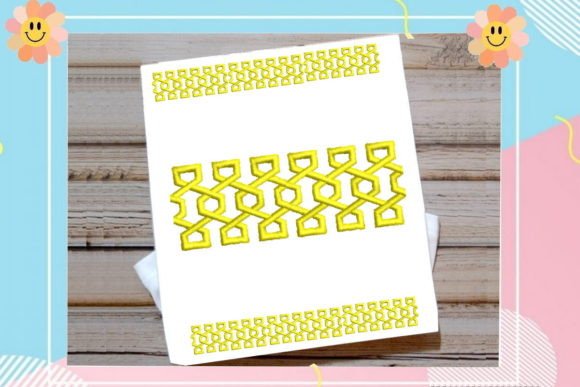
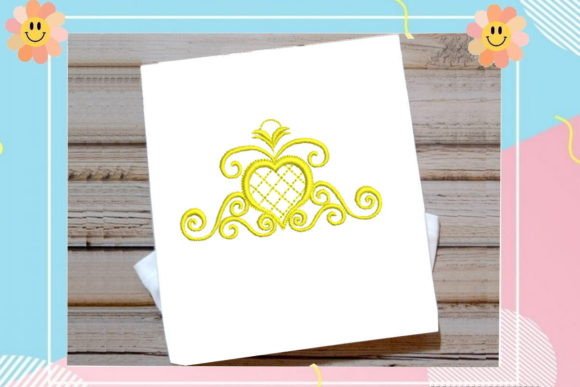
The moment I loaded Yellow Border into my software, the first thing that struck me was its mood. It feels undeniably sweet yet modern. In a market saturated with rustic farmhouse styles and overly complex floral motifs, this design offers a refreshing simplicity. It does not scream for attention with chaotic details; instead, it whispers elegance. For a craft fair product, this is crucial. Customers scanning a busy table need to understand what they are looking at within seconds. The clean lines and cheerful hue suggest a design that is both decorative and premium, fitting seamlessly into contemporary home decor or chic apparel.
Because it falls under the Borders category, its application is inherently flexible. Unlike a central motif that demands a specific placement, a border can frame a hem, accent a pocket, or line a collar. This versatility is a massive advantage for a small shop product line where efficiency is key.
Product Potential: Where Yellow Border Shines
To truly evaluate this design, I imagined setting up my display with various items. Here is how Yellow Border performs across different mediums:
- Tote Bags and Market Bags: This is arguably the strongest contender. A tote bag design needs to be visible from a distance. Placing this border along the bottom hem or around the top edge of a canvas tote creates an instant custom look. It elevates a plain bag into a giftable item without overwhelming the fabric.
- Aprons and Tea Towels: Kitchen textiles are perennial favorites at markets. For apron embroidery, running the border along the bib or the waist tie adds a professional touch. Similarly, tea towel embroidery benefits from the linear nature of the design. It frames the towel beautifully, making it feel like a finished piece of art rather than just a utility item.
- Embroidered Patches: If the design scales down well, it could work as an embroidered patch. However, this depends heavily on the detail level. If the yellow threads are too thin, they might get lost. But if it holds its shape, patches are high-margin items that appeal to younger demographics looking to customize denim jackets.
- Pillow Covers and Home Decor: Framing a square pillow cover with this border creates a cohesive, boutique aesthetic. It works particularly well on neutral linens or cottons, allowing the yellow to pop against the background.
Production Practicality for the Busy Maker
When you are producing inventory for a fair, time is money. I look for designs that are repeatable and reliable. Yellow Border appears to be excellent for batch production. Because it is a border, it often requires less hooping adjustment than large, centered motifs. You can set up an assembly line: hoop, stitch, unhoop, move to the next item. This efficiency is vital for keeping costs down on your finished product.
Furthermore, the design photographs exceptionally well. For the Etsy seller or anyone creating a printable mockup for social media, the contrast of yellow against white, navy, or natural linen is striking. High-contrast images stop the scroll, driving more traffic to your listings. The simplicity of the design means it does not distract from the product itself; it enhances the handmade product quality without looking cluttered.
Critical Considerations and Careful Use
While the design is promising, an experienced eye must look for potential pitfalls. Here are the technical aspects I would scrutinize before committing to a large production run:
- Stitch Density and Fabric Texture: Yellow thread can sometimes be tricky. If the stitch density is too low, the fabric underneath might show through, muddying the bright color. Conversely, if it is too dense, it could pucker lightweight fabrics like voile or thin cotton. I would test this on various fabric texture types to ensure the stitches lay flat and smooth.
- Curved Surfaces: Using borders on caps or curved pouches requires careful hooping. If the design is rigid, it may distort on a curved surface. I would recommend testing it on a structured cap first to see if the border maintains its integrity or if it gaps.
- Dark Fabrics: Yellow on dark fabric can be stunning, but only if the underlay is sufficient. Without proper underlay stitching, the yellow topstitching might look dull or disappear into the background. Always check your thread colors against your intended fabric palette.
- Scale and Clarity: Does the design lose clarity at smaller sizes? If you plan to use it on small pouches, ensure the lines do not merge. A border that looks crisp at 5 inches might look like a blob at 1 inch.
Designer Notes for Best Results
Before you list this as a commercial embroidery item in your shop, follow these practical steps to ensure quality control:
First, always test the design on scrap fabric identical to your final product. Do not skip this step. Check the hoop size requirements carefully. Since this is a border, you might need a larger hoop to accommodate long items like aprons, or you might need to use a "hoop-and-move" technique if your machine allows. Ensure you are using the correct stabilizer; a cut-away stabilizer is often safer for items that will be washed frequently, like tea towels and tote bags, to prevent stretching over time.
Second, create at least one real mockup. Digital design assets can be deceiving. Seeing the thread sheen in person helps you judge the true value of the piece. Compare different fabric colors to find the combination that makes the yellow sing. Finally, confirm the commercial licensing terms of the digital embroidery file. As a business owner, you must know if you are allowed to sell the physical items made with this design. Most designers allow this, but it is essential to verify before you invest in materials.
Final Verdict: A Strong Contender for Your Booth
In conclusion, Yellow Border is a strong candidate for any craft fair inventory. It balances modern aesthetics with practical application. It is easy for customers to understand, versatile enough for multiple product lines, and efficient for producers. By paying attention to stitch density and fabric choice, you can turn this simple border into a high-performing asset for your brand. It adds that touch of handmade quality that buyers crave, making it a worthwhile addition to your collection of Borders and Embroidery designs.